kids
Oct 2, 2026
Aerodynamics
By Karla Badoussi
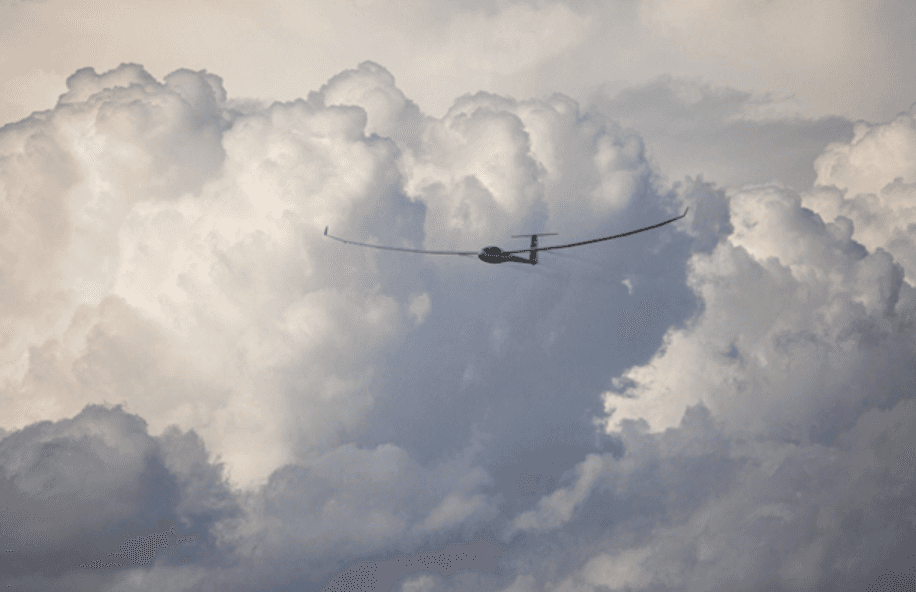
When I was young, I engineered the perfect flying machine. My masterpiece was a little more than an oversized kite made of twigs and old plastic bags.
At the time, I'd seen strong winds blowing similar materials off into the sky, and reasoned that a large enough contraption made of the same light plastic could carry me off the ground too. Little to say it was a doomed endeavor. Yet, in my failed attempts at conquering the laws of physics I became curious. That curiosity later led me to investigate the matter of flight.
It is as you would expect: unbelievably complex. Fascinating nonetheless.
Long ago, people needed sure ways to cross large bodies of water. Whether for trade, fishing, or travel, they built simple sailing ships. Although they did not fully understand the science behind them, their sails harnessed forces that we now recognize as principles of aerodynamics. As civilization advanced, people sought to understand the world around them. Looking up, they wondered about flight, how birds achieved it and whether humans could someday do the same.
By the late 1400s, Leonardo da Vinci had observed that air resists the motion of moving objects. Later, Galileo studied this effect and showed that it increased with speed. Others, such as Mark Munk, contributed to the thin airfoil theory. An airfoil is a shaped surface, like a wing, designed to generate more lift than drag. Daniel Bernoulli showed how faster-moving air results in lower pressure, an idea that helped scientists understand how airfoils produce lift. Then, in 1903 the Wright Brothers made their first powered flight, ushering in the age of modern aerodynamics.
Our short trip through history had two purposes: to give us an overview of how aerodynamics became what it is today, and to learn an important lesson about science itself. No great field is built by one person. Instead each new discovery rests on those who came before it.
Aerodynamics is a subset of fluid mechanics – a field concerned with the properties of fluids (liquids yes, but also gases, and plasma), as well as their responses to forces both at rest and in motion. The prefix “aero” has to do with air, and dynamics suggests being active and in motion. So aerodynamics has to do with the motion of air and the forces acting on objects passing through it. In this world there are four main elements of aerodynamics: Weight, Lift, Drag and Thrust.
Weight — It is the force of gravity pulling an object towards the earth. For an aircraft to take off and stay in the air, lift must be great enough to overcome its weight.

Lift — Lift is the force that opposes weight and allows an aircraft to fly. It is generated by an airfoil, such as a wing. As air flows around the airfoil, it creates a pressure difference and deflects air downward, producing lift. If you’re familiar with Newton’s Third Law, you know that for every action there is an equal and opposite reaction. When the airfoil pushes air downward, the air pushes back up, lifting the object.

Drag — Is a force that opposes an object’s motion, it acts as resistance against its forward movement. If you try running through a pool, you’ll realize it is harder than on solid ground because water has more drag than air.

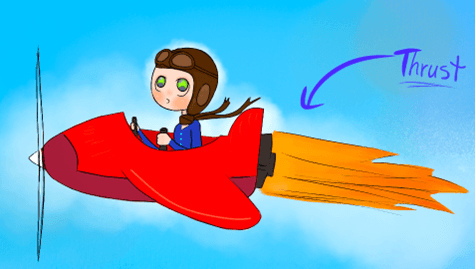
Thrust — Thrust acts opposite to drag. It is the forward force that propels an aircraft through the air and increases its speed. To fly, an aircraft must generate enough thrust to overcome air resistance.
For engineers these concepts are essential. Understanding how fluids act and being able to predict how well a design will work helps them make more efficient aircraft, rockets, trains, ships, cars and more!
Since fluids are everywhere, aerodynamics helps us understand and harness their forces to build safer, more durable, and efficient structures.
Image sourced via Pexels and original illustrations. Used for editorial purposes only. No commercial use. All rights belong to their respective owners.