aviation
May 1, 2025
Joshua Heyne: Building the Scientific and Regulatory Bridge to Scalable Sustainable Aviation Fuel
From lab testing to regulatory certification, Dr. Joshua Heyne is helping lead the push to commercialize SAF through predictive screening, AI modeling, and policy-aware deployment strategies. But as his work shows, scaling these fuels demands more than innovation—it requires a system built for speed, funding, and global alignment.
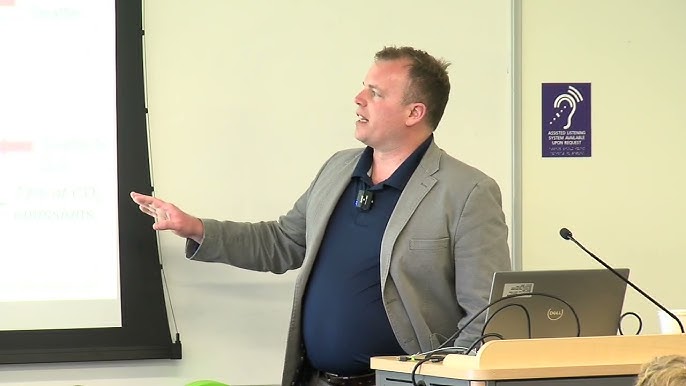
In the ongoing race toward decarbonizing aviation, innovation alone is not enough; it must be matched with a viable path to implementation.
EcoAero had the opportunity to speak with Joshua Heyne, Director of the Bioproducts Sciences and Engineering Laboratory at Washington State University Tri-Cities, Co-Director of the WSU-PNNL Bioproducts Institute, and a longstanding leader in the sustainable aviation fuel (SAF) community. With over a decade of dedicated work in SAF development and regulatory acceleration, Heyne has helped shape a roadmap for how emerging fuel technologies can move from lab bench to jet engine.
At the heart of Heyne’s contributions is his leadership in the National Jet Fuels Combustion Program, an expansive international effort involving 40 institutions and over 150 researchers. The program's primary goal was to streamline the SAF qualification process under the oversight of ASTM International. Heyne and his team pioneered a “pre-screening” methodology – a predictive, low-volume testing regime that evaluates SAF candidates before they enter the costly, formal approval pipeline. The stakes are significant: entering the ASTM certification process requires not only technical excellence but an estimated $100 million in research and scale-up investment. Pre-screening acts as both a safeguard and an accelerator, improving the odds of success for emerging fuels and startups alike.
To date, Heyne’s lab has tested hundreds of SAF candidates from more than 40 institutions worldwide, providing critical early validation that has helped these organizations secure Series A and B funding rounds. His team collaborates extensively with federal institutions including PNNL, NREL, LBNL, Sandia, Oak Ridge, and others – acting as a vital bridge between academic innovation and industrial viability.
Yet Heyne is acutely aware that technical validation is only one side of the SAF equation. Sustainable aviation fuel represents a dual identity: as an ASTM-certified fuel meeting strict performance and safety requirements, and as a climate solution defined by its life-cycle carbon intensity (CI). While ASTM D7566 certifies fuel functionality, the environmental legitimacy of a SAF pathway hinges on life cycle analysis (LCA), an assessment of emissions from feedstock collection to final combustion. Different geographies (e.g., EU, U.S., ICAO) apply varying LCA frameworks, and Heyne notes that this variability creates strategic complexity for SAF developers deciding between maximum production volume and minimum carbon intensity. The trade-offs between scale, geography, and climate impact are not uniform; they require dynamic thinking and adaptability.
Traditionally, researchers have relied on hard analytical models to predict fuel properties and combustion behavior – an approach that becomes unwieldy with increasing chemical complexity. More recently, machine learning and flexible modeling techniques have been used to correlate vast datasets with fuel performance characteristics, providing accurate predictions without the need for precise analytical equations. This AI-assisted approach is accelerating fuel discovery, optimizing production pathways, and reducing the time between innovation and deployment.
However, the most pressing challenge remains the commercial scale-up of SAF technologies. Presently, only one fully commercialized ASTM SAF pathway exists within a competitive landscape of multiple technology providers. While other ASTM-certified routes are approved on paper, they lack commercial maturity – i.e., infrastructure, suppliers, and widespread deployment. Transitioning a fuel pathway from lab scale to full commercial production involves sequential stages of scaling: engineering, pilot, demonstration, and finally first-commercial implementation. At each level, costs and risks increase exponentially – from millions in academic R&D to over a billion dollars for first-commercial plants. Minimizing this risk while driving down capital expenditures (CapEx) and operational expenditures (OpEx) is essential if SAF is to replicate the cost curve achieved by solar and wind technologies.
In the near term, Heyne remains confident that entrepreneurship and market incentives – not just policy – will drive SAF deployment. “As long as there is market demand and a feasible path to near-term profitability,” he explains, “entrepreneurs will enter the space.” The current policy environment, combined with interest from major airlines, has already catalyzed a wave of SAF startups. These innovators will be critical in lowering costs and scaling production capacity, provided the right market and regulatory frameworks remain in place.
While innovation is widespread in alternative propulsion systems, including hydrogen and electric aviation, no fully developed regulatory framework currently exists to certify such systems for widespread commercial use. On the other hand, SAF has an established approval process, seasoned stakeholders, and over 15 years of regulatory learning to build upon. “Electric and hydrogen may have promise,” he notes, “but near-term impact is still very limited.”
Looking ahead, Heyne sees the path to net-zero aviation hinging on the commercialization of multiple SAF pathways, especially those that go beyond current feedstock constraints. With the limited scalability of existing lipid-based feedstocks, new conversion technologies and feedstock diversification will be essential. His recent work organizing the International Conference on Sustainable Aviation Research (ICSAR) reflects this vision: a cross-disciplinary effort to unite researchers in engineering, policy, chemistry, economics, and beyond. “Holistic thinking is essential,” Heyne emphasizes. “The heads and tails of these disciplines overlap – and they need to communicate.”
As global aviation pursues deep decarbonization, leaders like Heyne are working to ensure that SAF innovation is not only technically sound but also commercially scalable and regulatory-ready. At EcoAero, we are reminded that success lies not only in the breakthroughs we achieve, but also in the systems we build to carry them forward.
Image sourced via Google. Used for editorial purposes only. No commercial use. All rights belong to their respective owners.
More in
aviation

aviation
Sep 4, 2026
Hydrogen and its Role in the Future of Sustainable Commercial Aviation
Hydrogen fuel in aerospace could cut down on the vast amounts of CO2 produced in air travel and shows. Balanced systems and initiatives will help promote hydrogen fueling, but the push to decarbonize air travel is difficult and costly. By Aadya Karthik

aviation
Sep 4, 2026
Contrails: Can Smarter Flight Paths Make Aviation Greener?
Condensation trails, the vapor trails left behind planes, account for 35% of aviation's total global warming impact. Smarter architecture of flight paths and plane choices could dramatically reduce this effect. By Lakshanya Rajesh