opinion
Dec 1, 2025
Is Sustainable Aviation Fuel worth it for Military Aviation? By Aviraj Dastidar
Despite high upfront costs, sustainable aviation fuels offer long-term strategic value to the U.S. military: reducing dependence on foreign oil, stabilizing energy access during geopolitical crises, and potentially cutting future fuel costs. In this EcoAero article, Aviraj Dastidar weighs the case for green investment in defense aviation.
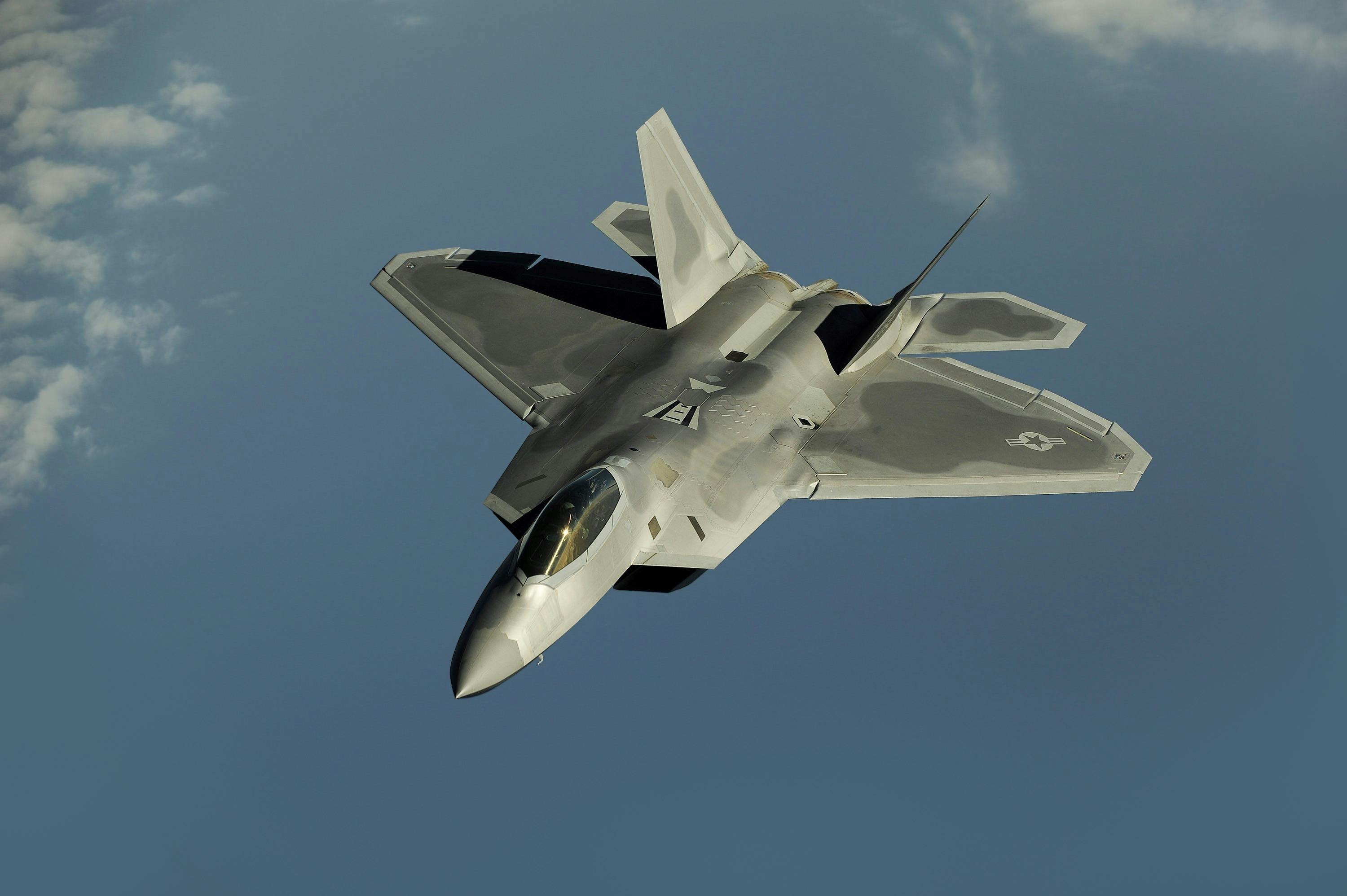
In 2023, the United States Department of Defense awarded a series of contracts cumulatively worth 65 million dollars to a sustainable aviation fuel startup called Air Company. This deal is just one example in a series of multi-million-dollar efforts and expenditures by the United States military to invest in green technologies. Naturally, the scale of such expenditures on sustainable aerospace technologies in defense contexts begets the question of whether such research is fiscally wise to undertake. Some may argue that because military operations are a much smaller contributor to greenhouse gas emissions than civilian aviation (military and defense activities around the world account for approximately 1% of all greenhouse gas emissions, while civilian aviation is responsible for around 2% of global carbon dioxide emissions), air forces and military aviation units around the world should limit expenditures on sustainable aerospace technology, arguing that such budgetary allocations would be more effective in other areas.
However, there is a very strong case from a strategic and financial perspective to support the use of defense funding to research these sustainable aviation technologies. Consider that in 2018, the United States Air Force consumed over two billion gallons of fuel. The procurement of said fuel requires oil, and despite being the largest domestic producer of oil in the world, the United States still relies on trade with foreign nation-states (especially those in the Middle East) in order to fully meet its energy demands. However, when tensions flare in the Middle East, the price of oil tends to skyrocket (consider the Arab Oil Embargo in the 1970s, the Iranian Revolution in 1979, and the First Gulf War in 1991, three separate instances of conflict in the Middle East directly leading to the price of oil doubling). In addition to oil itself becoming more expensive whenever turmoil brews in the region, the safety of the oil pipeline from the Gulf States to the United States enters a state of jeopardy. In particular, the 700,000 barrels of crude oil per day (accounting for 11% of all US crude oil imports) that the US obtains via ships passing through the Strait of Hormuz is at exceptionally high risk because of Iran’s proximity to the chokepoint.
In other words, in order for the United States Air Force and other military aviation units to remain properly fueled for their operations, they must rely on (among other things) the cooperation of OPEC, a high level of stability in the Middle East, the ability to freely navigate the Strait of Hormuz, and for there to be no major disruptions in global maritime trade networks. In practice, what this means is that the United States military is at risk of either purchasing needed fuel at an elevated rate or, worse yet, having its fuel supply compromised.
Expenditures on sustainable aviation fuel research would play a key role in assuaging all of these concerns. Sustainable aviation fuel is primarily made by converting feedstocks into usable fuel, which means its domestic production can easily be facilitated, especially in the United States, where the agriculture industry is worth over 1.5 trillion dollars. Having an alternative energy source to conventional fuels would also reduce reliance on crude oil, which, as addressed before, has the potential to be not only strategically dangerous but also financially inefficient for the United States military.
Some may argue that, from a financial standpoint, sustainable aviation fuels are less appealing than conventional fuels (indeed, SAFs are generally 120-700% more expensive than their traditional counterparts). However, a large reason for this is that the technology is still in its infancy. Continued research expenditures into these systems is the antidote to this issue: further studies will enable the discovery of new production techniques and distribution systems to make production more affordable, and increased usage of SAFs themselves would itself lower the cost per gallon because the bulk production rate of such fuels would go down.
Ultimately, while some may be hesitant about the usage of taxpayer dollars on researching sustainable aviation fuels for the military, in practice, such an investment would be incredibly wise, not only in terms of ensuring the strategic security of the US military but also in terms of making US military aviation operations more affordable in the long run from a fuel expenditure standpoint.
Image sourced via Pexels. Used for editorial purposes only. No commercial use. All rights belong to their respective owners.
More in
opinion

opinion
Feb 28, 2026
Could Hybrid-Electric Planes Be the Future?
With battery limitations slowing the path to fully electric aviation, hybrid-electric systems are emerging as a practical alternative. Combining conventional engines with electric propulsion can cut emissions, improve efficiency, and provide a scalable transition toward sustainable flight. By Heer Patel

opinion
Sep 27, 2025
Can 3D Printing Reduce the Cost of the Space Industry? By Heer Patel
From faster manufacturing on Earth to on-demand production in orbit, additive manufacturing is reshaping the economics of space exploration. In this EcoAero article, Heer Patel explores how part consolidation, in-space recycling, and lunar or Martian resource use could reduce launch costs and enable more sustainable long-term missions.