kids
Nov 28, 2026
Why do Planes Fly So High?
By Lakshanya Rajesh

You get into your seat, buckle your seat belt, and pull your blanket over yourself. Your plane accelerates on the runway and lifts off. Then, the seatbelt sign turns off, signaling that the plane has reached its final altitude. You open your window and see that you are flying above the cloud layer! Your plane has climbed thousands of feet into the sky—but why?

While typical maximum altitudes for airplanes depend on each aircraft’s capabilities and limits, a typical commercial airline usually cruises between 30,000 and 40,000 feet. One main advantage of flying this high is that the air is much thinner, which allows for less aerodynamic drag. As a result, less fuel is needed to power the aircraft, significantly helping with the aircraft’s efficiency. For this reason, longer-distance aircraft tend to fly at higher altitudes to conserve fuel. Moreover, the thin air also allows the aerodynamic surfaces to perform more accurately.

Furthermore, weather disturbances such as storms and turbulence are less likely to occur at much higher altitudes. This allows for a safer and smoother ride in the skies for the passengers and crew. Emergencies are another major reason that higher altitudes are a large advantage. For example, if an aircraft loses an engine at a higher altitude, the pilots have a longer amount of time to understand the issue and try to regain control of the aircraft as it slowly descends. Lastly, the higher altitudes also make navigation much easier for air traffic controllers, as the traffic flows are much more structured. As a result, air traffic controllers can control east and westbound traffic much more efficiently.

However, flying too high can also present issues to the pilots and the airlines. As always, it is imperative to optimize for various conditions. For example, when aircraft reach higher altitudes, there is often less wind, and therefore less airflow, to assist the aircraft. As a result, it becomes less fuel-efficient to fly at these altitudes. Additionally, flying at higher altitudes means more time to reach safer altitudes due to emergencies such as rapid decompression. The importance of reaching the right balance for a flying altitude is quite clear. Lastly, the weight of an aircraft can prevent it from reaching the desired speeds at higher altitudes if enough lift is not generated.
So, the next time you look down at the clouds from an airplane, remember that the plane’s altitude is no accident. It reflects careful choices about how the aircraft flies, the conditions around it, and how to make the trip efficient.
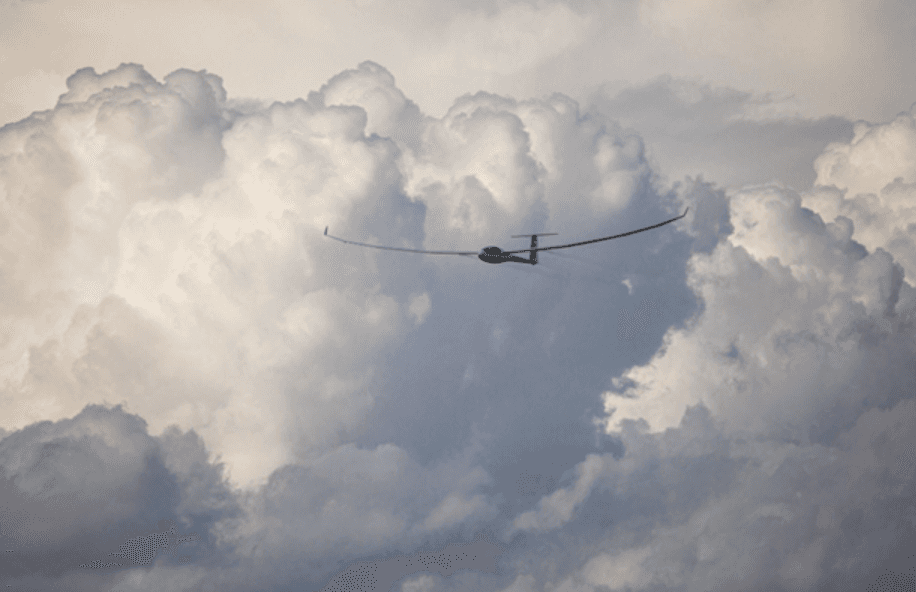
Image sourced via Delta News Hub. Used for editorial purposes only. No commercial use. All rights belong to their respective owners.