opinion
Oct 3, 2026
Is GPS Really the Solution to our Navigation Problem?
By Aneesh Kukreti
You’re driving on a highway you’ve never been on before, relying entirely on GPS to get you to your destination. Suddenly, the GPS reroutes and tells you to exit the highway. You blindly obey it, only for it to direct you through a roundabout and back onto the highway you were previously on!
The robotic voice then dubiously tells you: “You are still on the fastest route.”
This is likely a situation that almost any driver can relate to, and it could have occurred for a variety of reasons. Maybe the navigation software detected a small delay ahead, or perhaps the GPS temporarily lost your location due to signal multipath or other environment-dependent errors.
But if you’re driving near conflict-ridden areas, such as the Middle East or the Korean Demilitarized Zone, large errors in GPS signals are more obvious and more dangerous. Drivers find that their GPS suddenly starts to display locations hundreds of miles away in other cities or countries, or even in the middle of restricted waters. Such chaos is not accidental – it is the result of GNSS spoofing, a type of intentional GNSS interference.
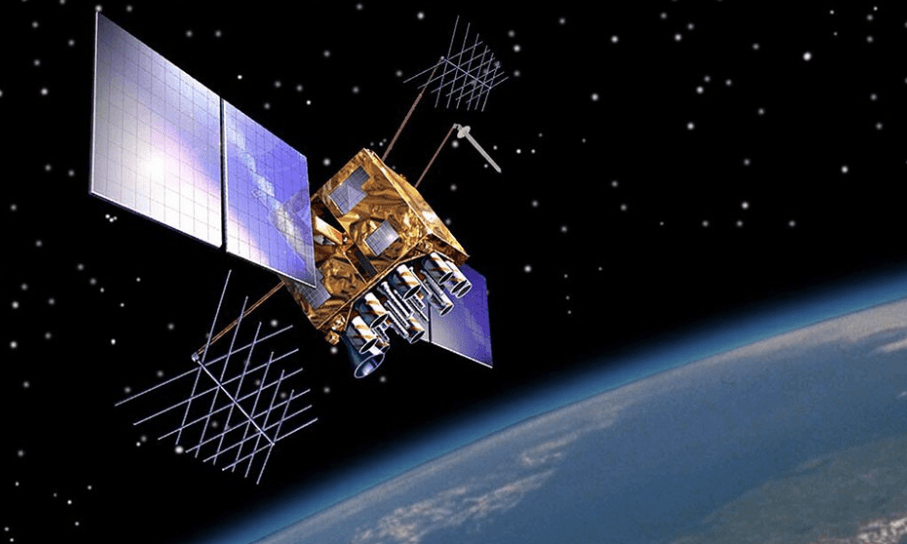
As GNSS (Global Navigation Satellite Systems) satellites are located in Medium Earth Orbit, around 20,000 km away, the received power for civilian GNSS signals can be as low as 10 to the -16th watts. This makes it extremely easy to broadcast signals that “jam” or drown out the authentic satellite signals.
GNSS spoofing takes this principle to the next level. Spoofers generally have two objectives: to jam authentic GNSS signals while broadcasting fake ones. If successfully executed, this can be extremely dangerous, especially on aircraft and ships near restricted airspace or waters.
Spoofing is generally split into two categories: asynchronous and synchronous spoofing. Asynchronous spoofing is simpler to execute but much easier to detect. It involves broadcasting an extremely high-power signal that overcomes the much fainter authentic GNSS signals, often causing the receiver to detect a large jump on position or increase in power. On the other hand, a synchronized spoofer begins by broadcasting fake signals that align with the authentic satellite signals before slowly deviating off course. Since this does not cause a large jump in position or received power, it is much harder to detect.
As conflict in the world increases, GPS interference over large areas of airspace have become a common form of “electronic warfare”. Countries like Russia have been jamming GNSS signals over the Baltic Sea, and 123,000 flights in the area have been affected in the first four months of 2025 alone. But what is even more concerning is that the ability to interfere with GPS isn’t restricted to governments – all it requires is some code from GitHub and a $300 SDR (Software Defined Radio). Many truck drivers use such jammers/spoofers so their employers can’t track their location, a practice which has caused serious issues, especially near airports.
Some of the current research being done in this field focuses on utilizing existing infrastructure (i.e., cell towers, Starlink satellites, etc.) that broadcast “Signals of Opportunity” that a receiver can rely on when GNSS isn’t available. Others focus on navigation systems based on variations in the magnetic or gravitational fields. Still others focus on designing systems based on camera measurements and IMUs (inertial navigation systems).
However, most of these technologies are subject to jamming, inaccuracies, or are too computationally expensive to reasonably scale up. Although researchers are actively working to address these problems, GPS currently seems to be our best navigation solution.
To be fair, however, nobody had foreseen the impact that GPS would have on civilian technology. Initially designed as a navigation system for the Air Force, early versions of it struggled to pass the planning stage. Brad Parkinson, the head of the GPS development program at the Department of Defense, famously tried to convince the military of GPS’s potential by claiming it had the ability to “drop 5 bombs in the same hole”. However, if the GPS is spoofed, we might just be dropping the bombs on the other side of the world.
We at EcoAero believe that sustainability is multifaceted. A sustainable navigation system, for example, must be commercially scalable, safe from malicious interference, and reasonably accurate. With ubiquitous GNSS spoofing and the accessibility of the hardware necessary to perform it, GPS may not be the solution that many hoped it would be. The fact that it has become the backbone of many technologies today only exacerbates the need for an alternative navigation system.
Image sourced via National Oceanic and Atmospheric Administration. Used for editorial purposes only. No commercial use. All rights belong to their respective owners.
More in
opinion

opinion
Feb 28, 2026
Could Hybrid-Electric Planes Be the Future?
With battery limitations slowing the path to fully electric aviation, hybrid-electric systems are emerging as a practical alternative. Combining conventional engines with electric propulsion can cut emissions, improve efficiency, and provide a scalable transition toward sustainable flight. By Heer Patel

opinion
Dec 1, 2025
Is Sustainable Aviation Fuel worth it for Military Aviation? By Aviraj Dastidar
Despite high upfront costs, sustainable aviation fuels offer long-term strategic value to the U.S. military: reducing dependence on foreign oil, stabilizing energy access during geopolitical crises, and potentially cutting future fuel costs. In this EcoAero article, Aviraj Dastidar weighs the case for green investment in defense aviation.