opinion
Sep 27, 2025
Can 3D Printing Reduce the Cost of the Space Industry? By Heer Patel
From faster manufacturing on Earth to on-demand production in orbit, additive manufacturing is reshaping the economics of space exploration. In this EcoAero article, Heer Patel explores how part consolidation, in-space recycling, and lunar or Martian resource use could reduce launch costs and enable more sustainable long-term missions.
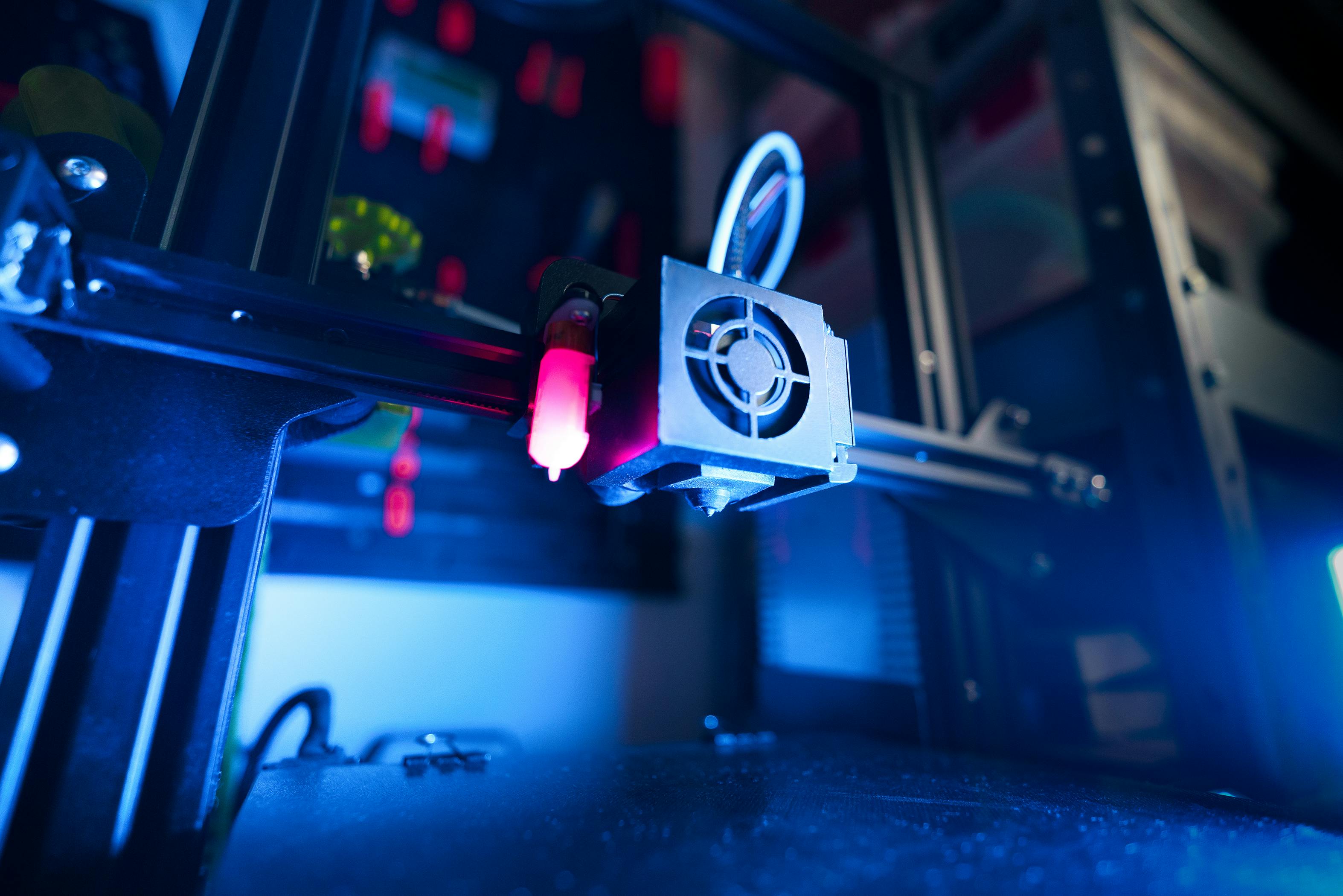
For many decades, the main issue with limitless space exploration has been closely tied to the substantially high costs of launch. Historically, NASA approximated the price of sending a payload weighing a single pound into orbit to be $10,000. Although reusable rockets from private companies, such as SpaceX and Blue Origin, have substantially decreased these figures. However, the fundamental physics remains the same, that space is costly to reach due to every gram of tool, equipment, and every liter of fuel needs a vast amount of energy investment to leave Earth’s gravity. 3D-printing, a method of additive manufacturing, is a newly surfacing method for reducing the cost of space exploration, which allows for a shift that will allow the space industry in both the private and government sectors to be substantially more economically sustainable.
The immediate cost-saving impact of 3D printing can be seen on Earth, particularly in the manufacturing phase of aerospace vehicles. The conventional method for manufacturing in the aerospace industry is significantly slower and more expensive, leading to the requirement of custom molds and intricate assemblies that contain hundreds of individual parts or other subassemblies. Finnegan noted that NASA’s 3D-printed fuel injector for the SLS (Space Launch System) had decreased production times from roughly a single year to simply four months, resulting in 70% reduced costs. Additionally, aerospace companies like Rocket Lab and Aerojet Rocketdyne have utilized additive manufacturing to consolidate various components into a singular part built for high-performance. This method of “part consolidation” decreases the weight of the overall spacecraft, which lowers the costs of launch, as well as minimizing the risk and labor often connected with elaborate assemblies for aerospace vehicles and spacecraft.
Beyond just Earth, 3D printing can allow for addressing various resupply missions that previously proved to be difficult. In 2014, the International Space Station (ISS) showcased an ability by being able to print a fully functional ratchet wrench from a file that was transferred from Earth ground stations. This type of “on-demand” manufacturing cuts out the need to store every spare part. Cutter Consortium had stated, up to a third of all spare materials required for the ISS could potentially be 3D printed and manufactured in orbit. In all, allowing to conserve as much cargo space as possible, and reducing the need for costly resupplying focused missions.
Additionally, the sustainability factor reduces the cost in space via going through a “circular economy". NASA’s “Refabricator” experiment on the ISS has proven that packing foam and packing foam can be fully reused and recycled into new material for various other new tools. From converting the trash currently present into stock material for tomorrow’s equipment, missions can be launched into orbit with less material. This type of capability is essential for long-term missions to Mars, where resupply missions aren’t just expensive, but also highly difficult for long timeframes.
Furthermore, the cost-reduction methods in “In-Situ Resource Utilization” (ISRU), which is the act of living off the land, where projects such as NASA’s Olympus and Redwire’s Regolith Printing are currently developing methods towards using Martian or Lunar dust to manufacture roads and habitat areas. The usage of “space dirt” as materials for building living areas saves a substantial amount of cost rather than transferring materials across celestial bodies.
At EcoAero, we recognize the usage of innovation and advanced 3D printing technolgies to being embraced in the aerospace industry rather than being sidelined. As 3D printing revolutionizes logistics in space. By reducing cycles for R&D, allowing orbital recycling and full utilization of local resources, additive manufacturing is eliminating large financial barriers that face us in order to reach the stars.
Image sourced via Pexels. Used for editorial purposes only. No commercial use. All rights belong to their respective owners.
More in
opinion
opinion
Oct 3, 2026
Is GPS Really the Solution to our Navigation Problem?
By Aadya Karthik
opinion
Feb 28, 2026
Could Hybrid-Electric Planes Be the Future?
With battery limitations slowing the path to fully electric aviation, hybrid-electric systems are emerging as a practical alternative. Combining conventional engines with electric propulsion can cut emissions, improve efficiency, and provide a scalable transition toward sustainable flight. By Heer Patel